



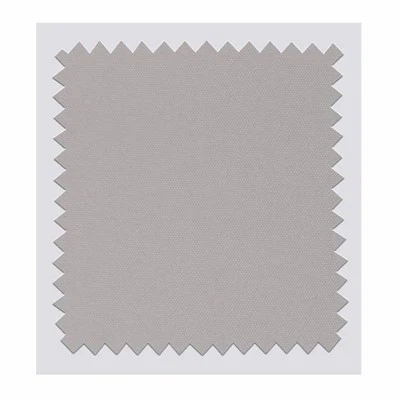
Iron On Roller Blind Backing Fabric
Composition: 100% Polyester
Width: 300/cm
Weight: 320GSM
Heat-Activated Backing for Roller Blind Converters & Commercial Blind Manufacturers


This iron on roller blind backing fabric, article LS202416, is a converter substrate rather than a finished blind. It uses a 100% polyester base cloth at 320 GSM with a heat-activated acrylic adhesive on the reverse side. Standard width is 300 cm, with custom widths from 1.5 m to 3.2 m confirmed at order. Rolls are supplied at 50 m on a 3-inch paper core. The backing is laminated to the face fabric before cutting or welding, with a recommended activation window of 140–160 °C, 12–18 seconds, and 3–4 bar roller pressure; a short trial on your own laminator and face cloth is advised before bulk running.
As a roller blind backing fabric manufacturer, Lishun controls adhesive coat weight and base cloth tension at the coating line, so the activation behaviour of this iron on roller blind backing fabric stays consistent from roll to roll. When laminated with an opaque face fabric, it contributes to full blackout and gives the composite enough body and edge stability for flat drops above 2 m while still winding cleanly on a standard roller tube. Shrinkage is held at ≤1%, peel strength at ≥3 N/cm, and flame retardancy to NFPA 701, EN 13773, BS 5867, or DIN 4102-B1 can be specified at order stage.
This iron on roller blind backing fabric is specified for commercial roller blinds, hotel blackout shades, residential blackout rollers, and OEM/ODM private-label blind programs. Lishun does not make finished blinds; production stays on coating and fabric supply, which keeps the technical discussion on adhesive activation, GSM tolerance, width, FR treatment, and batch consistency. Trade terms are FOB, sea freight is the main mode, standard lead time is 45–60 days depending on volume, FR standard, and width, and samples are available for line trials. Send your face fabric specification, finished blind width, target FR standard, quantity per width and colour, and destination port for a quotation.
What B2B Buyers Usually Check Before Approving a Backing Supplier
Bond consistency across the roll
Peel strength on this article is tested at ≥3 N/cm after lamination under the parameters above. More importantly, the adhesive coat weight is monitored during coating rather than only checked on the finished roll, so the activation behaviour does not drift from the head to the tail of a 50 m roll.
Dimensional behaviour after lamination
The backing is built to resist shrinkage and curling once fused. A backing that moves after lamination throws off cut lengths and creates rework at the cutting table. Lishun holds shrinkage on this construction at ≤1% under standard test conditions, which keeps the laminated composite flat through the cutting and welding stages.
Flame retardancy for the destination market
The standard article can be produced with FR treatment to meet NFPA 701 for the US, EN 13773 Class 1 and BS 5867 for the UK and EU, and DIN 4102-B1 for Germany. These are not default on every roll; they are specified at order stage and should be written into the purchase order with the target standard named. Lishun coordinates the relevant test documentation for the shipment.
Custom width without a capacity penalty
The 1.5–3.2 m width range covers most commercial roller blind production. A converter running a 2.8 m face fabric does not need to buy a 3.2 m backing and trim it down, which reduces waste and handling. Widths are confirmed at order and cut to the ordered width before packing.

Product Parameter
| Products name | LS202416 |
|
Product style |
Customized |
|
Product raw material |
Fabric+Foamcoating/Acrylic |
|
Shading rate |
100% |
|
Flame retardant |
NFPA701or customized |
|
Color |
Acrylic |
|
Application |
Roller Blind Fabric |
|
OEM&ODM |
ACCEPT |

Commercial roller blind fabrication
Offices, conference rooms, and hospitality projects require blinds that hold a flat drop over wide windows. The 320 GSM construction gives the composite enough body to resist billowing and edge curl on drops above 2 m, while remaining thin enough to wind cleanly on a standard roller tube.


Hotel blackout roller shades
Hotel guest-room specifications usually call for full light exclusion. When laminated with a blackout face fabric, this backing contributes to the light-blocking performance while providing the stiffness needed for motorised or chain-driven shade systems that cycle daily.
Residential blackout roller blinds
For higher-end residential projects where the face fabric is decorative and needs support, the heat-activated bond lets the fabricator use a face cloth that would otherwise be too limp for a roller application. The backing adds body without changing the face appearance.
OEM / ODM backing supply
Converters who supply private-label blinds can specify this backing as the standard substrate for a blackout roller program. Lishun produces to the converter's face-fabric bonding trial and holds the specification across repeat orders, so the converter does not re-qualify the backing each season.

Why Lishun as Your Roller Blind Backing Fabric Supplier
Lishun does not make finished blinds. The factory coats and supplies curtain and roller blind fabrics, which means the technical conversation stays on the fabric side: adhesive activation, GSM tolerance, width, FR treatment, and batch consistency. The production base runs four high-end coating lines with an annual sunshade fabric capacity of 4.5 million metres, and the process is set up for custom orders rather than only catalogue articles.
For this iron on roller blind backing fabric, the relevant supplier difference is the adhesive coating step. The acrylic adhesive is applied in-house, not outsourced, so the activation window and coat weight are controlled at the coating line. When a converter reports that the backing behaved differently on a later shipment, Lishun can trace the coating batch rather than pointing to a third-party finisher.
Trade terms are FOB, with sea freight as the primary mode and air or land arrangements available on request. Standard production lead time runs 45–60 days depending on order volume and whether FR treatment or a custom width is specified. Samples are available for line trials; the sample conversation should start with the face fabric you intend to laminate, not only the backing, because the bond performance is a two-fabric result.


Full Shading

Semi-Shading

Tough Material, Can't be Torn!
What This Backing Fabric Does on Your Line
The adhesive side is engineered to activate inside a controlled heat-press or calender window. It is not a sew-in interlining and it is not a spray adhesive substitute. Converters use it because the bond is repeatable across long runs: once the face fabric and backing pass through the laminator at the specified temperature and pressure, the composite cools into a flat, roll-stable laminate that can go straight to cutting or welding without a separate stiffening step.
For buyers sourcing a roller blind backing fabric manufacturer, the practical question is whether the backing will behave the same on the first roll and the fortieth. Lishun controls adhesive coat weight and base cloth tension during coating, so the activation threshold stays consistent enough to set the laminator once and run.

Factory Address:
Yunhebei Industrial District, Dama Town, Tongxiang City, Jiaxing City, Zhejiang Province.
R&D Capacity
OEM, ODM
R&D Staff
5-10 People
Production Lines
Above
Annual Output Value
US$5 Million - US$10 Million

Factory Showcase


Production Process

FAQ
Q: Can this backing be bonded with a hand iron rather than a calender?
A: It can, but the result will not match a calibrated laminator. A hand iron gives uneven pressure and temperature across the surface, which usually shows up as edge lifting or patchy adhesion after cooling. For production, use a heat press or calender. For a one-off sample, use a low-steam setting and work in small sections, then let the composite cool fully before judging the bond.
Q: Does the adhesive transfer through a lightweight face fabric?
A: The risk exists if the lamination temperature is pushed too high or the dwell time is too long for a thin face cloth. Start at the lower end of the recommended window and increase dwell time before increasing temperature. If you are working with a face fabric under 150 GSM, request a short-length trial roll so the bond can be checked on your actual cloth before bulk commitment.
Q: How should the backing be stored before use?
A: Keep rolls in the original wrapping, flat or on a supported rack, below 30 °C and out of direct sunlight. Do not store rolls standing on end for extended periods, because the roll edge can deform under its own weight. If a roll has been stored in a cold warehouse, let it reach room temperature before lamination; cold adhesive takes longer to activate and can read as a weak bond if the line speed is not adjusted.
Q: Can the FR treatment be added to a custom width, or does it limit the width options?
A: FR treatment and custom width are specified together at order stage. The 1.5–3.2 m width range remains available with FR treatment, but the combination should be confirmed on the purchase order with the target standard named (NFPA 701, EN 13773, BS 5867, or DIN 4102-B1). Do not assume a previously supplied FR backing will automatically match a new width without reconfirming the production route.
Q: What happens if the laminated composite curls at the edges after cooling?
A: Edge curl after lamination usually points to one of three causes: insufficient cooling before winding, uneven roller pressure across the width, or a face fabric that shrinks differently from the backing. Run a short trial with the face fabric and check the composite flat on a table after it reaches room temperature. If curl persists, send a sample of the laminated composite to Lishun with the face fabric details so the adhesive coat weight can be checked against the batch.
Q: Is a sample free, and what sample length is useful for a converter trial?
A: Lishun provides samples for line trials. For a converter, a 3–5 metre length is more useful than an A4 swatch because it allows the backing to pass through your actual laminator and be checked for bond, curl, and winding behaviour. Share the face fabric specification when requesting the sample so the trial reflects the production combination.
Hot Tags: iron on roller blind backing fabric, China iron on roller blind backing fabric manufacturers, suppliers, factory, Blackout Roller Blind Fabric, 300 300oxford White Coating, Jacquard Weave White Coating, 300 600oxford White Coating, Jacquard Transmitting Fabric, 150 300oxford Silver Coating
Previous
Polyester Ramie TransmittingNext
No InformationYou Might Also Like

Send Inquiry