



Double Side Composite Blackout Coating Fabric
Double Side Composite Blackout Coating Fabric manufacturer
Double Side Composite Blackout Coating Fabric is a high‑performance textile engineered with a special blackout coating on both sides, ensuring complete light blockage, privacy, and UV protection. Ideal for curtains, roller blinds, and projection screens, it offers excellent thermal insulation, noise reduction, and durability. Its smooth texture and wrinkle‑resistant properties make it easy to maintain and perfect for both residential and commercial applications.
-
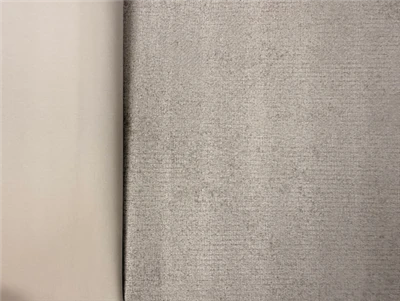
![Grey White Coated Curtain Fabric]() Grey White Coated Curtain Fabric
Grey White Coated Curtain FabricItem Number: LSR1071-A
Read More
Available Widths: 280CM / 300CM / 320CM (Extra-wide for seamless installations)
Weight: 200 GSM (Grams per Square Meter)
Coating Structure: White Base +... -
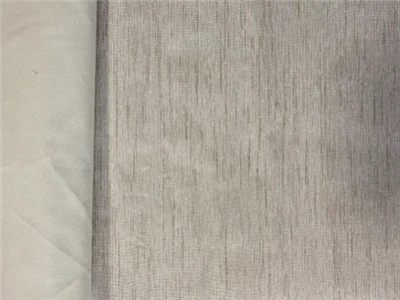
![Double Composite Blackout Curtain Fabric]() Double Composite Blackout Curtain Fabric
Double Composite Blackout Curtain FabricLSR1031
Read More
Product Name: Double Composite Blackout Curtain Fabric
Composition: 100% Premium Polyester
Technics / Process: Double Composite Blackout Coating
Width: 280cm -... -
![Blackout Curtains for Darkroom]() Blackout Curtains for Darkroom
Blackout Curtains for DarkroomProducts name:LSFH2416
Read More
Composition:100% Polyester
Width: 280/cm-300/cm
Weight: 390g -
![Insulated Blackout Fabric]() Insulated Blackout Fabric
Insulated Blackout FabricProducts name:LSFH2522
Read More
Composition:100% Polyester
Width: 300/cm
Weight: 220GSM -
![Blackout Curtain Fabric Waterproof]() Blackout Curtain Fabric Waterproof
Blackout Curtain Fabric WaterproofProducts name:LSFH2401
Read More
Composition:100% Polyester
Width: 280/cm-300/cm
Weight: 260g -
![Composite Blackout Fabric]() Composite Blackout Fabric
Composite Blackout FabricProducts name:LSFH2403
Read More
Composition: 100% Polyester
Width: 280/cm-300/cm
Weight: 460g -
![Blackout Fabric For Windows]() Blackout Fabric For Windows
Blackout Fabric For WindowsProducts name:LSFH2404
Read More
Composition:100% Polyester
Width: 280/cm-300/cm
Weight: 290g -
![Composite Blackout Curtains]() Composite Blackout Curtains
Composite Blackout CurtainsProducts name:LSFH2416
Read More
Composition:100% Polyester
Width: 280/cm-300/cm
Weight: 390g -
![Embossed Blackout Curtains]() Embossed Blackout Curtains
Embossed Blackout CurtainsProducts name:LSFH2417
Read More
Composition:100% Polyester
Width: 280/cm-300/cm
Weight: 390g -
![Non-toxic Blackout Curtains]() Non-toxic Blackout Curtains
Non-toxic Blackout CurtainsProducts name:LSFH2522
Read More
Composition:100% Polyester
Width: 300/cm
Weight: 220GSM -
![Double Sided Blackout Curtains]() Double Sided Blackout Curtains
Double Sided Blackout CurtainsProducts name:LSFH2401
Read More
Composition:100% Polyester
Width: 280/cm-300/cm
Weight: 260g -
![Double Sided Black Curtains]() Double Sided Black Curtains
Double Sided Black CurtainsProducts name:LSFH2403
Read More
Composition: 100% Polyester
Width: 280/cm-300/cm
Weight: 460g


what is Double Side Composite Blackout Coating Fabric ?
Double side composite blackout coating fabric is a fabric that has a blackout coating on both sides, blocking light and providing privacy. It can be used for curtains and other applications where both sides of the fabric are visible.
Features Of Double Side Composite Blackout Coating Fabric
Double Side Composite Blackout Coating Fabric is a special material that combines the advantages of multiple materials and has the following characteristics:

Wrinkle-Resistant, Color Fastness, Abrasion-Resistant
This fabric is made with double-sided composite technology and is wrinkle-resistant, color fastness, and abrasion-resistant. It feels similar to Damar, but is more affordable.

Overall Light Blocking and Enhanced Thermal Insulation
Double-Sided Composite Shading Fabric is made by combining multiple layers of materials, each with a specific role. This design provides comprehensive light blocking and enhanced thermal insulation.

Enhanced Privacy
The layered structure of double-sided composite shade textiles enhances privacy by preventing visibility from both sides of the fabric. This is particularly beneficial for residential spaces or commercial locations, where privacy and confidentiality are of paramount importance.

Waterproofness
Double-Sided calendered coated fabrics are also water-resistant. Depending on the specific product, the coated fabric and calendering process make it highly water-resistant or even waterproof.
Application Of Double Side Composite Blackout Coating Fabric
Double-sided composite blackout coating fabric can be used in many applications, including:

Light protection
Blackout fabrics are used in many applications to block light, including in homes, hotels, and public institutions.
Light-sensitive equipment
Double-layered polyurethane-coated nylon fabric can protect light-sensitive equipment by preventing light from penetrating the weave.
Room acoustics
Washable, opaque, double-sided blackout fabrics can improve a room's acoustics.
Masking
Blackout fabrics are used for light management in TV and film sets, and to define spaces at large events.
Process Of Double Side Composite Blackout Coating Fabric
Material preparation
First, it is necessary to select raw materials suitable for making shading coated fabric. Usually, this fabric is made of 100% polyester fiber, which is because polyester fiber has good durability and wrinkle resistance.
Double-sided composite technology
Next, the polyester fiber is combined with other materials using double-sided composite technology. This technology can make the fabric have better wrinkle resistance, color fastness and wear resistance.
Coating treatment
Then, the fabric is coated. Coating can improve the waterproofness and light blocking properties of the fabric. In this process, the thickness and uniformity of the coating need to be precisely controlled to ensure that the various properties of the fabric meet the expected standards.
Calendering treatment
Finally, the coated fabric is calendered. Calendering can make the coating more firmly attached to the fabric, and it can also make the surface of the fabric smoother. This process is very important for improving the waterproofness and durability of the fabric.

Components Of Double Side Composite Blackout Coating Fabric

Base fabric
Polyester is a popular choice for blackout curtains because it's affordable and can be used to make insulating curtains.
Coating
The coating can be a foam or PVC. For example, PERICOAT offers two coating compounds for blackout fabrics:
PERICOAT BO/NW: A white foam coating compound for flame retardant stable foam coatings
PERICOAT BO/NB: A black pigmented, self-crosslinking foam compound for blackout coating of technical textiles
Layers
Blackout fabrics can be made up of multiple layers:
Three-pass blackout lining: This is made by spraying the base fabric with a white acrylic foam, then spraying with a black opaque membrane, and finally spraying it with another layer of white acrylic foam on the outside.
Recommended layers: For extremely sensitive applications, double-layered use is recommended.
How to store Double Side Composite Blackout Coating Fabric
How to store double-sided composite shading coated fabric is essential to maintain its quality and performance. Here are some suggestions for storing this fabric:
Storage environment
Double-sided composite shading coated fabric should be stored in a dry, ventilated, clean environment, away from direct sunlight and high temperature. This is because sunlight and high temperature may cause the coating to age and affect the shading performance of the fabric.
Moisture-proof measures
Although double-sided composite shading coated fabric has a certain degree of waterproofness, it is still necessary to pay attention to moisture-proof when stored for a long time. You can use moisture-proof agents or place dehumidifiers in the storage area to prevent the fabric from getting damp due to excessive humidity.
Avoid heavy pressure
When storing double-sided composite shading coated fabric, avoid heavy pressure to avoid damaging the structure and coating of the fabric. The fabric can be rolled up or folded, but the number of folds should be minimized to prevent creases from affecting the flatness of the fabric.
Regular inspection
Check the storage status of the fabric regularly to detect and deal with possible problems in a timely manner. For example, if you find dust or stains on the surface of the fabric, you should clean it up in time; if you find that the fabric is damaged, you should repair it in time.
About us
Lishun Textile is a modern textile company in China, specializing in the design, produc-tion and sales of apparel fabrics, home textiles and industrial textile materials. With high qualty, advanced equipments, environmental awareness and innovation, it has gained a strong reputation in both domestic and international markets

2009
Year Established
8
Production Line
20+
Quality Control Staffs
60+
Exporting Country
Our factory


Our Exhibition


FAQS
Q: What is blackout coating?
A: For absolute light protection and total darkening of rooms blackout fabrics are finished with a lightproof coating. Woven fabrics with blackout coatings are used as home textiles for private and commercial applications as curtains, pleated or roller blinds for light, sun, sight and heat protection.
Q: What is a blackout fabric?
A: Blackout refers to a foam-backed, opaque fabric used to black out light. Blackout fabrics are most commonly found in hotel rooms as curtain linings or drapery fabrics, blocking much of the light that would otherwise enter through a window when the curtains are closed.
Q: Is blackout fabric waterproof?
A: This is very much thanks to their water resistant quality that prevents its fabric from absorbing oil or water particles in the air, or when splashed on its surface.
Q: Do you need to hem blackout fabric?
A: With Blackout fabric linings the hems should be as short as possible 1-2cm on all four sides, this will enable the curtains and the blackout lining to work much better at blocking out the light.
Q: Is blackout fabric heavy?
A: Blackout fabric is a type of material that is designed to block out light that passes through it. It is typically made from a heavy, tightly woven fabric that is coated with a light-blocking layer or has a special finish applied to it.
Q: Can you wash blackout fabric?
A: Blackout curtain lining from Direct Fabrics, like most types of curtain linings, can typically be machine-washed
Q: Does blackout fabric keep heat out?
A: By effectively blocking sunlight, blackout curtains significantly reduce heat gain in a room, leading to a more naturally cool environment. This not only enhances comfort during the hot summer months but also results in lower air conditioning costs.
Q: How do you get wrinkles out of blackout fabric?
A: There are three easy ways to remove creases from your blackout curtains: Ironing or steaming, washing, or simply hanging the curtains.
Q: Which side of blackout fabric faces out?
A: When drawing your curtains during the day, a blackout lining will ensure the colour of your main drape isn't saturated/washed out by sunlight. The coated side of both thermal coated and blackout coated linings must face the glass to maximize UV and mildew resistant properties.
Q: Does blackout fabric fray?
A: The blackout fabric does not fray, so you don't need to hem it. Cut it to the measurements you determined at the beginning, but only add 1 inch width and length to the first measurement.
Q: What is blackout fabric made of?
A: It blocks 95-100% of light and is lightweight. Three-pass blackout lining is made by first spraying the base fabric with a white acrylic foam, then spraying with a black opaque membrane, and finally spraying it with another layer of white acrylic foam on the outside.
Q: Is blackout fabric machine washable?
A: To machine wash coated blackout curtains, it is best to use a gentle cycle with cold water and a mild detergent.
Q: Is blackout material waterproof?
A: Well, when it comes to similarities with roller blinds, we can count two. Just like blackout roller blinds, PVC blackout vertical blinds can withstand water, while the polyester ones, much like young children, should not be trusted around water.
Q: Can you iron blackout lining fabric?
A: When ironing blackout curtains, the best approach is to indirectly iron them by laying a piece of paper or a thin cloth over the curtains and ironing the protective layer. This technique helps prevent damage to the blackout lining while still smoothing out wrinkles.
Q: Here are the tips I gleaned from there, from Susan, and from my own experience:
A: Do not use pins. ...
Use a teflon needle.
Use a long stitch length. ...
Manage the weight of the fabric with care. ...
Since the blackout lining is so stable, you may want to stabilize the main curtain fabric.
Q: Can I put blackout curtains in the dryer?
A: Tumble drying blackout curtains after washing them is generally not recommended, as it can damage the fabric and affect the effectiveness of the blackout lining. The heat from the dryer can cause the fabric to shrink, fade, or become distorted, compromising its ability to block out light effectively
Q: Does blackout lining fray?
A: The fabric is easy to cut to the required size with a pair of sharp scissors - the fabric does not fray there's no need for fiddly hemming.
Q: What is the downside of blackout curtains?
A: Blackout curtains have few health disadvantages. However, manufacturers may produce blackout curtains or roller blinds using polyvinyl chloride (PVC). This material has phthalates, chemicals that can enter and damage the human body through air particles, direct contact, and other methods.
Q: How wide is blackout fabric?
A: This is a fabric that blocks out 99% of the light. It is 110" wide, available in white and sold by the yard. This lining is extra wide with no crease for a better viewing screen. It can also be used to make projector screens.
Q: Can I iron blackout curtain fabric?
A: Polyester is the most common material used for blackout curtains and is generally easy to iron. It's best to use a low heat setting to avoid damaging the fabric or the lining. Use a press cloth, such as a thin cotton towel or a pillowcase, to protect the fabric from direct heat exposure.