



Composite Blackout Fabric
Composition: 100% Polyester
Width: 280/cm-300/cm
Weight: 460g
Sourcing note for curtain manufacturers, wholesalers, and project buyers


This double-side composite blackout coating fabric is built on a 100% polyester base cloth with blackout coating applied to both faces, delivering 100% light blockage for curtain and roller blind production. Standard widths are 280 cm and 300 cm, with 320 cm subject to confirmation, and GSM is set against the order's coating build and handfeel target. The composite construction supports cutting and sewing stability, keeps both faces presentable where the reverse side remains visible, and can be specified with NFPA 701, EN 13773, BS 5867, or DIN 4102 B1 flame retardancy. Foam, acrylic, flocking, silicone, and TPU coating routes are available depending on the performance brief.
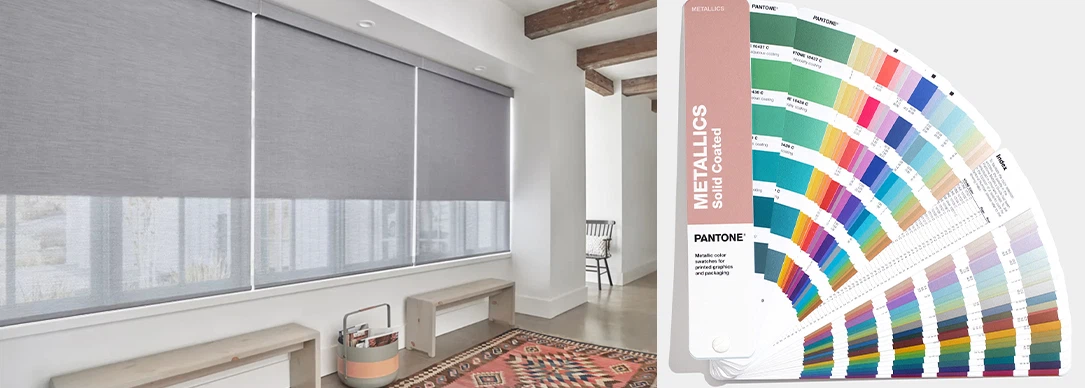
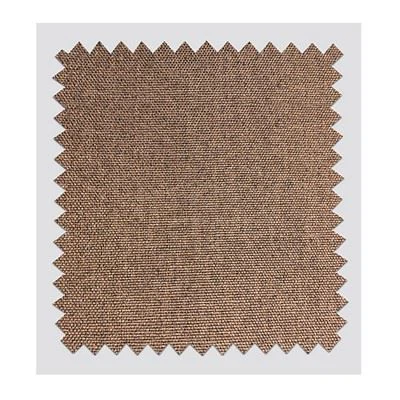
Color is custom-to-sample with light fastness ≥ 4 and wash fastness ≥ 3, and roll packing, private-label carton marks, and shipping marks are handled at packing stage. This composite blackout fabric is specified for hotel guestrooms, project curtain programs, residential blackout lining, and roller blind applications, not for finished curtains. MOQ is quoted per color and construction, lead time is typically 45–60 days, and FOB is the main trade term. Buyers can send face fabric and heading samples for a sewing trial before bulk approval.
What "double-side composite" means in production terms
Cutting and sewing stability
The double-side build reduces the tendency of one face to pull differently from the other during cutting and seaming. Curtain makers running large panel programs usually notice this in fold recovery and seam behavior rather than in the technical data sheet.
Face and back are both presentable
For applications where the reverse side of the curtain is visible - unlined panels, sheer-over-blackout combinations, roller blinds - a double-side composite removes the need for a separate lining to hide a coated back.
Coating adhesion is tested at both interfaces
Bulk approval should include an adhesion check, not only a light-blocking check. More on this in the "What to approve before bulk" section.

Product Parameter
| Products name | LSFH2403 |
|
Product style |
customized |
|
Product raw material |
fabric+foamcoating/arcylic |
|
Shading rate |
100% |
|
Flame retardant |
NFPA701or customized |
|
Color |
arcylic (can not be dark col) |
|
Application |
Double Side Composite Blackout Coating Fabric |
|
OEM&ODM |
ACCEPT |
Most quality disputes on composite blackout fabric do not come from the blackout rate itself. They come from the four items below. We recommend building these into your approval protocol rather than relying on a single swatch review.
Coating adhesion at both faces.
Ask for a simple adhesion check on the bulk sample: fold, crease, and inspect the coating-to-base bond at the fold line. A composite build that passes light-blocking but fails adhesion will show delamination at seams and folds after installation. Our production uses heat-set adhesion control; the approval sample is the right place to verify it.
Odor and formaldehyde control.
This is one of the first questions hospitality and retail buyers ask, and for good reason - blackout coatings are a known category for residual odor if the formulation and curing are not controlled. Our coating routes are selected with low-odor and low-formaldehyde targets; confirm the applicable threshold for your market at inquiry so the correct test documentation is prepared.

Shade continuity across rolls.
For multi-room hotel programs and replenishment orders, the risk is not the first bulk - it is the second bulk six months later. Confirm how shade bands are controlled and how approval records are retained. We keep reference rolls for repeat programs.
Handfeel against your heading construction.
A composite blackout lining can meet every lab number and still behave differently from what your sewing floor expects in a pleated or wave-fold heading. Send the face fabric and heading sample if you have one; we will run a sewing trial against the actual construction rather than against a generic handfeel target.
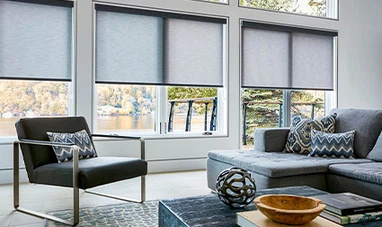
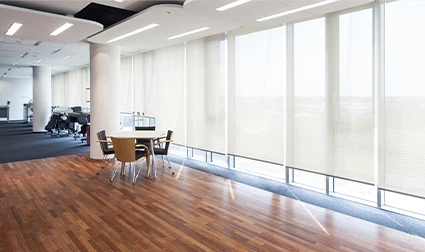
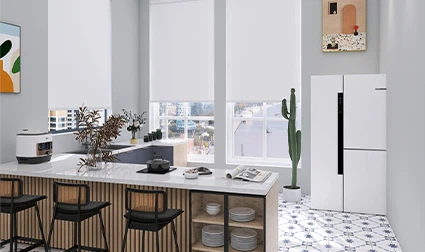

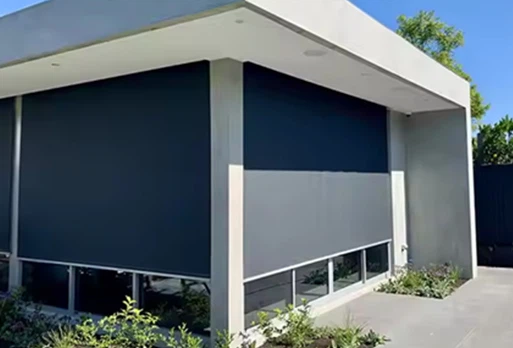
Full Shading

Semi-Shading
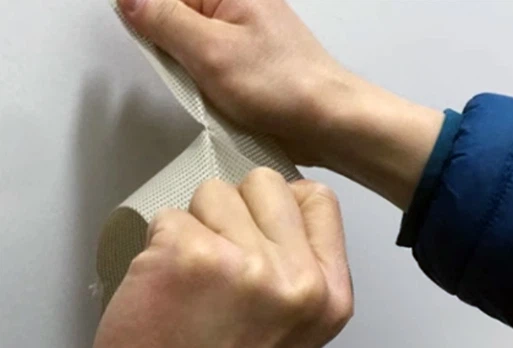
Tough Material, Can't be Torn!
Functional scope
Specified for: total light exclusion in hotel guestrooms, project curtain programs, residential blackout lining, roller blind applications, and spaces where the reverse side of the panel remains visible.
Not the right route for: programs where sound reduction is a primary performance requirement, or where the softest possible drape is the deciding factor. We manufacture curtain fabric, not finished curtains, and we would rather point you to a different construction in our range than have a composite build underperform against a brief it was never designed for.

Factory Address:
Yunhebei Industrial District, Dama Town, Tongxiang City, Jiaxing City, Zhejiang Province.
R&D Capacity
OEM, ODM
R&D Staff
5-10 People
Production Lines
Above
Annual Output Value
US$5 Million - US$10 Million

Factory Showcase
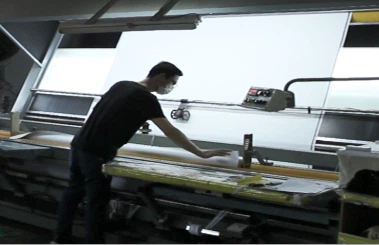
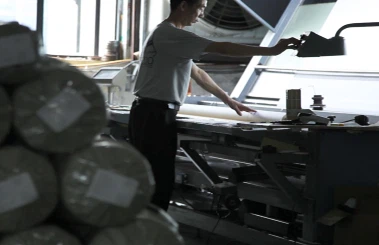

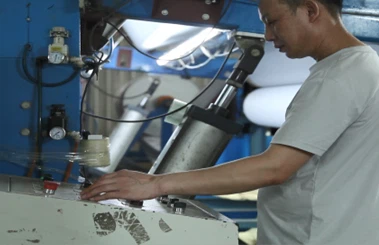
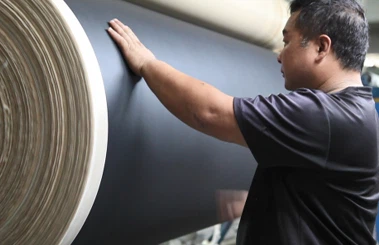
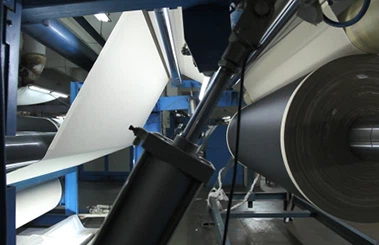

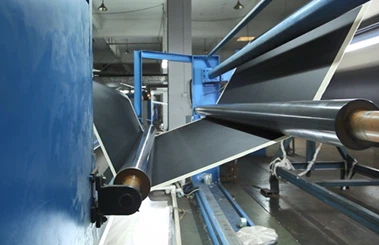
Production Process

FAQ
Q: What is the difference between "double-side composite" and "double-side coating" in your product naming?
A: In our range, "double-side composite" means the blackout layer is part of a multi-layer build applied to both faces, not a single coating pass on the back. The distinction matters at the cutting table: a composite build generally holds fold and seam behavior more consistently across the roll. If your technical team needs the layer sequence for a tender document, ask for the construction sheet at inquiry.
Q: Can you match a competitor's composite blackout fabric from a sample we send?
A: Yes, for coating and construction evaluation. Send the sample with the target performance items marked - blackout rate, width, GSM tolerance, and FR standard if applicable. We will confirm what can be matched and where a substitution in coating route may be necessary. We do not reverse-engineer proprietary layer sequences, but we can match the functional specification.
Q: What GSM should we specify for a hotel guestroom program?
A: There is no universal answer, because GSM interacts with coating build and heading style. A heavier composite does not automatically mean better blackout; it usually means more body and a different drape. Tell us the heading type, whether the panel is lined or unlined, and the target handfeel, and we will propose a GSM range rather than a single number.
Q: Do you supply full-container orders, and can mixed constructions be consolidated?
A: Yes. Container programs are supported. Mixed constructions - for example, a composite blackout for guestrooms and a dimout for corridors - can be consolidated subject to production scheduling. Confirm the mix at quotation stage so packing and shipping marks are set correctly.
Q: What documentation can you provide for customs and destination-market compliance?
A: Certificates of origin, export documentation, and test reports for the applicable flame-retardancy standard can be prepared in line with the order. If your market requires a specific certification format, flag it before production, not after shipment.
Q: Can we visit the coating line before placing the first bulk order?
A: Factory visits are welcomed by appointment. For buyers who cannot travel, we can arrange a video walk-through of the coating and inspection process against your specification, with the relevant rolls identified before the call.
Hot Tags: composite blackout fabric, China composite blackout fabric manufacturers, suppliers, factory, Blackout Fabric Blinds for Windows, 100 Polyester Blackout Fabric, 100 Coating Blackout Fabric, 100 Blackout Fabric, double side composite blackout coating fabric, Outdoor Blackout Fabric
Previous
Blackout Curtains for DarkroomNext
No InformationYou Might Also Like


Send Inquiry