



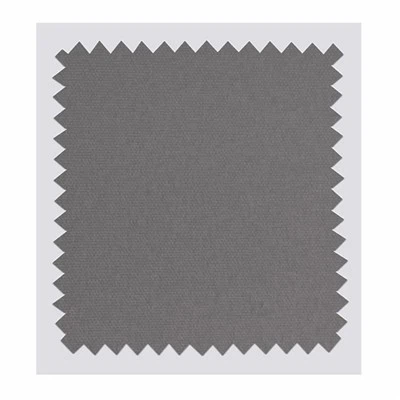
Roller Shade Fabric By The Yard
Composition: 100% Polyester
Width: 200/cm
Weight: 160GSM
Roller Shade Fabric by the Yard - PVC-Coated Fiberglass and Polyester, Rolled Goods for Blind Assembly


Rolled roller shade fabric supplied in 1.83 m to 3.20 m widths, 25–50 m roll lengths, in blackout, sunscreen and dim-out constructions. Sold as fabric only - not finished blinds. Cut lengths from full rolls, with width tolerances and hand feel consistent from the first meter to the last.
Specifications
| Parameter | Range / Standard |
| Composition | PVC-coated fiberglass (70/30 typical); PVC-coated polyester available |
| Weight | 210–650 g/m² (blackout: 400–540 g/m²; sunscreen: 210–410 g/m²) |
| Thickness | 0.28–0.66 mm |
| Roll width | 1.83 m / 2.44 m / 3.05 m / 3.20 m; custom widths on request |
| Roll length | 25 m / 30 m / 50 m; cut-to-length from 1 m |
| Openness factor | 1% / 3% / 5% / 10% (sunscreen grades) |
| Light transmission | Blackout ≤ 0.1%; dim-out 1–5%; sunscreen graded by OF |
| Color fastness to light | ≥ 6 (ISO 105-B02, blue wool scale) |
| Fire performance | FR grades available to NFPA 701 / EN 13501-1 B-s1,d0 / B1 (confirm by construction) |
| Curling / dimensional stability | Heat-set after coating; flat-lay retention tested per roll lot |
| Packaging | Rolled on core, wrapped in PE film, palletized or carton per order |
Buyer note: openness factor and light transmission are measured on finished fabric, not on the base scrim. Request a bench sample with the exact OF and color you intend to order - screen-rendered colors do not represent the delivered shade.
Where the fabric goes
This page covers fabric for roller blind assembly. It does not cover finished shades, cassettes, or motorized systems.
Typical end uses for the rolled goods:
Commercial roller shades
Office and hotel windows, where flat roll-up and consistent color across multiple drops matter more than hand feel.
01
Residential blackout rollers
Bedroom and media-room windows, using the 400–540 g/m² blackout range.
02
Sunscreen rollers
West- and south-facing glazing where solar heat gain and glare need to be reduced without closing the window to daylight.
03
Skylight and angled
Window shades - fiberglass constructions hold tension better on non-vertical installations.
04
Zip-screen and outdoor roller fabric
Heavier PVC-coated grades, where the same coating line is used with a higher coating weight and tighter dimensional tolerance.
05
If the project involves curtain fabric for draped or Roman applications rather than rolled shades, that is a different construction and a different page - the coating weight and stabilizing finish are not interchangeable.

Product Parameter
| Products name | LS202413 |
|
Product style |
Customized |
|
Product raw material |
Fabric+Foamcoating/Acrylic |
|
Shading rate |
100% |
|
Flame retardant |
NFPA701Or Customized |
|
Color |
Acrylic |
|
Application |
Roller Blind Fabric |
|
OEM&ODM |
ACCEPT |

Roller shade fabric is specified differently from draped curtain fabric. It is wound and unwound thousands of times under tension. The failure points are not drape or hand feel - they are curling at the hem, width shrinkage after coating, and uneven coating weight across the roll.


The base cloth is woven from fiberglass or high-tenacity polyester yarn, then coated on both faces with PVC. Fiberglass gives the dimensional stability that keeps a 3.2 m-wide roll tracking straight on the tube; polyester gives a softer hand and better tear propagation resistance in sunscreen grades. The coating weight is controlled within ±5% across the roll, so the fabric does not develop a "tight edge / loose center" condition that causes the blind to telescope on the tube.
Blackout constructions use a four-layer build: a fiberglass scrim laminated between PVC film layers, with a blackout interlayer. This is the construction behind the 400–540 g/m² blackout range. Sunscreen grades use a lighter coating on a woven scrim, with openness factor set by the weave and coating penetration rather than by perforation.

Manufacturing and quality control
Production runs on a coating line in Jiaxing, Zhejiang, with in-house weaving support for fiberglass and polyester base cloths. The factory has supplied roller blind fabric to B2B customers since 2017, with OEM programs and custom width development as standard capabilities.
Control points that affect roller shade fabric specifically:
Coating weight checked at the head, middle and tail of each roll; records kept per lot.
Width measured after coating, not before; tolerance stated on the packing list.
Curling tested by cutting a 1 m × 1 m sample from each lot and conditioning flat for 24 hours before measuring edge lift.
Color matched to an approved lab dip or physical standard under D65 lighting; batch-to-batch variation controlled by retaining a master sample per color.
Openness factor verified by light-transmission measurement on the finished fabric for sunscreen grades.
Third-party test reports for fire performance and color fastness are available per construction. Report numbers and test dates are provided with the quotation, not as generic certificates.


Full Shading

Semi-Shading

Tough Material, Can't be Torn!
Request a Roller Shade Fabric Sample or Quotation
To receive a quotation, please provide your required fabric width, weight, color, shading level and estimated order quantity.
For custom projects, buyers can also share a physical sample or technical specification sheet for evaluation.
Lishun supplies roller blind fabrics for wholesale, distribution and manufacturing requirements. Contact our team to discuss sample availability, custom specifications and bulk supply.

Factory Address:
Yunhebei Industrial District, Dama Town, Tongxiang City, Jiaxing City, Zhejiang Province.
R&D Capacity
OEM, ODM
R&D Staff
5-10 People
Production Lines
Above
Annual Output Value
US$5 Million - US$10 Million

Factory Showcase


Production Process

FAQ
Q: Can we order a width between the standard sizes without paying a full custom-run premium?
A: Yes, for stock colors. Master rolls are held at 3.20 m and slit down to the requested width. The minimum for slit-to-width is 500 m per width. A true custom weaving width - where the base cloth itself is woven at a non-standard width - carries a 2,000 m minimum. The distinction matters for costing: slitting is a finishing operation; custom weaving is a loom setup.
Q: How do we compare your blackout fabric with a three-pass or four-pass coating?
A: Ask for the construction breakdown: number of PVC layers, whether the blackout interlayer is a separate film or a pigmented coating, and the measured light transmission on the finished fabric. A four-layer fiberglass build at 440–540 g/m² will block light to ≤0.1%, but the coating adhesion and the heat-set finish determine whether it stays flat on the tube after 10,000 roll cycles. We supply the construction detail and a 1 m bench sample so your assembly team can test roll-up before committing to a production order.
Q: What is the difference between this roller shade fabric and your blackout coated cloth page?
A: Blackout coated cloth is sold for curtain and drapery fabrication - it is finished for drape and sewing, with hand feel and fold retention as the priorities. Roller shade fabric is heat-set under tension for flat roll-up, with coating weight balanced across the width to prevent telescoping on the tube. The two use overlapping coating technology but different base cloths, finishing passes, and width/roll formats. They are not substitutes in a roller blind assembly.
Q: Can you match a specific openness factor and color together, or does one constrain the other?
A: Openness factor is set by the weave and the degree of coating penetration. Darker colors at the same OF read visually darker and transmit less glare than light colors. If the project specifies both an exact OF and an exact color, we run a lab dip on the target base cloth and measure light transmission on the dipped sample, not on the greige fabric. That avoids approving a color that meets the shade card but misses the OF tolerance after coating.
Q: Do you supply fabric for zip-screen systems, or only interior roller shades?
A: The same coating line produces heavier PVC-coated fiberglass for zip-screen and exterior roller applications, typically 500–650 g/m² with higher tear strength and tighter width tolerance. Specify the track system and the required edge finish (hem pocket, welded edge, or Keder) at quotation stage; the coating weight and edge preparation differ from interior roller shade fabric even when the base construction looks similar.
Hot Tags: roller shade fabric by the yard, China roller shade fabric by the yard manufacturers, suppliers, factory, Jacquard Cross Bamboo Transmitting, 600 600oxford White Coating, 21 21 Polyester Transmitting, Double Sided Blackout Blind Fabric, Eco friendly Blackout Roller Blinds Fabrics, Plain Blackout Fabric
Previous
Polyester Ramie TransmittingNext
No InformationYou Might Also Like


Send Inquiry